Get Care
Jaundice
What is Jaundice?
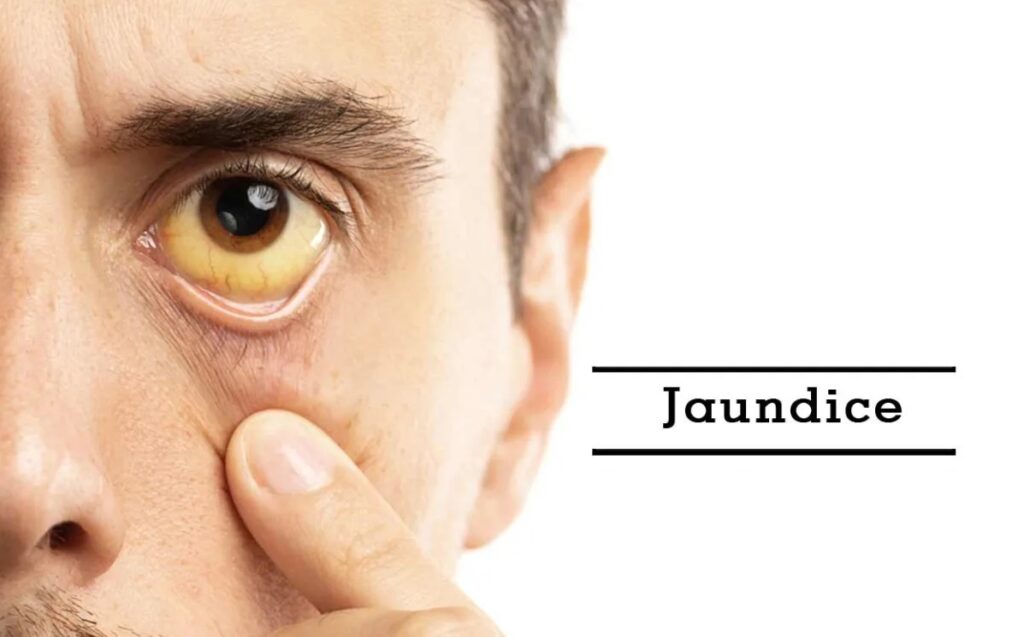
Jaundice is a clinical condition characterized by the yellowing of the skin, eyes (particularly the sclera), and mucous membranes due to an abnormal accumulation of bilirubin—a yellow pigment formed during the breakdown of red blood cells. Under normal conditions, the liver processes bilirubin and eliminates it via the bile into the intestine. However, when this process is disrupted at any point—before it reaches the liver, within the liver, or after it exits the liver—bilirubin accumulates in the bloodstream, leading to jaundice.
What are the causes of Jaundice?
The causes of jaundice can be categorized based on the phase of bilirubin metabolism where the disruption occurs:
(1) Pre-Hepatic (Hemolytic) Causes
These occur due to increased breakdown of red blood cells, leading to excessive production of unconjugated bilirubin that overwhelms the liver’s ability to process it.
- Hemolytic anemia (autoimmune or inherited)
- Malaria and other parasitic infections
- Sickle cell disease
- Thalassemia
- Hereditary spherocytosis
- Drug-induced hemolysis (e.g., due to certain antibiotics or antimalarials)
- Mismatched blood transfusion reactions
(2) Hepatic (Hepatocellular) Causes
These involve direct damage to the liver cells (hepatocytes), impairing their ability to uptake, conjugate, or excrete bilirubin.
- Acute and chronic viral hepatitis (A, B, C, D, E)
- Alcoholic hepatitis or chronic alcohol-related liver disease
- Non-alcoholic fatty liver disease (NAFLD)
- Autoimmune hepatitis
- Cirrhosis (of various etiologies)
- Liver cancer (primary or metastatic)
- Drug-induced liver injury (e.g., paracetamol overdose, anti-tubercular drugs)
- Genetic disorders like Gilbert’s syndrome, Crigler-Najjar syndrome
3. Post-Hepatic (Obstructive or Cholestatic) Causes
These occur when there is a mechanical obstruction in the bile ducts preventing the flow of conjugated bilirubin into the intestines.
- Gallstones (choledocholithiasis)
- Strictures or narrowing of bile ducts (post-surgical or inflammatory)
- Cholangiocarcinoma (bile duct cancer)
- Carcinoma of the pancreas or periampullary region
- Primary sclerosing cholangitis
- Parasitic infestations (e.g., liver flukes)
- Biliary atresia (in neonates)
What are the signs and symptoms of Jaundice?
Jaundice may present with a range of signs and symptoms, depending on its cause and severity. Common clinical features include:
(1) Yellowish Discoloration of Skin, Sclera, and Mucous Membranes
- This is the hallmark sign of jaundice.
- It results from bilirubin accumulation in the tissues, especially visible in the whites of the eyes (sclera) and skin.
- More easily noticed under natural light and typically starts from the face and progresses downward.
(2) Dark (Tea-Colored) Urine
- Caused by the presence of conjugated (water-soluble) bilirubin in the urine.
- Seen in hepatic and posthepatic jaundice, where bilirubin is processed by the liver but not excreted properly into bile.
- A key clue differentiating obstructive or hepatic jaundice from pre-hepatic causes (where urine remains normal in color).
(3) Pale or Clay-Colored Stools
- Normally, bile pigments give stool its brown color.
- In obstructive jaundice, bile cannot reach the intestines due to blockage (e.g., gallstones, tumors), leading to acholic stools.
- A clear indicator of bile flow obstruction.
(4) Generalized Itching (Pruritus)
- Due to bile salt accumulation in the bloodstream and skin.
- Often intense and distressing, especially in cholestatic (obstructive) jaundice.
- Typically worse at night and resistant to antihistamines.
(5) Loss of Appetite, Nausea, or Vomiting
- Common nonspecific symptoms linked to liver dysfunction or systemic effects of elevated bilirubin.
- May also indicate underlying hepatitis or malignancy.
(6) Right Upper Abdominal Discomfort or Pain
- Suggests involvement of the liver, gallbladder, or bile ducts.
- Can be due to liver inflammation, gallstones, or tumors causing ductal obstruction.
(7) Fever with Chills
Strongly points to infectious causes such as:
- Cholangitis (infection of the bile ducts)
- Viral hepatitis
The triad of fever, jaundice, and right upper quadrant pain is classic for ascending cholangitis.
(8) Fatigue and Weakness
- Common in chronic liver disease, where the liver’s metabolic functions are compromised.
- May also result from anemia in hemolytic jaundice or systemic illness.
(9) Weight Loss
- Often a sign of chronic illness or malignancy.
- In liver cancers or metastatic disease, weight loss may be dramatic and rapid.
(10) Swelling in Legs (Edema) or Abdomen (Ascites)
- Caused by hypoalbuminemia (low albumin from reduced liver synthesis) and portal hypertension.
- Seen in advanced liver disease, especially cirrhosis.
- Ascites often presents with a distended abdomen and shifting dullness.
(11) Confusion or Altered Sensorium
- Known as hepatic encephalopathy.
- Occurs when toxins like ammonia, normally detoxified by the liver, accumulate and affect the brain.
- May range from mild confusion to coma in severe cases.
(12) Jaundice in Newborns
- Physiological jaundice is common and usually harmless, appearing after the first 24 hours.
- Pathological jaundice appears early (<24 hours), is prolonged, or reaches high levels and may signal serious issues such as:
- Biliary atresia
- Neonatal sepsis
- Hemolytic disease of the newborn
What are the risk factors of Jaundice?
Understanding risk factors helps in early detection and prevention. These include:
- Chronic alcohol consumption
- Viral hepatitis exposure, including through contaminated food, water, or unsafe injections.
- Use of hepatotoxic drugs such as anti-tubercular medications, certain antibiotics, or chemotherapy agents
- Genetic predisposition to conditions like Gilbert’s syndrome or hemolytic anemias
- Gallstone disease or history of biliary surgeries
- Obesity and metabolic syndrome, contributing to fatty liver
- Occupational exposure to industrial chemicals (e.g., carbon tetrachloride)
- Autoimmune diseases affecting the liver or bile ducts
- Family history of liver disease or hemoglobinopathies
What are the complications of Jaundice?
If jaundice is left untreated, or if the underlying cause progresses, serious complications can arise, including:
- Hepatic Encephalopathy – Toxin accumulation affects brain function, leading to confusion, altered behavior, or coma
- Ascites – Fluid accumulation in the abdomen due to portal hypertension or hypoalbuminemia
- Coagulopathy – Impaired clotting due to reduced synthesis of clotting factors by the liver
- Renal dysfunction (Hepatorenal Syndrome) – A life-threatening complication in advanced liver disease
- Spontaneous bacterial peritonitis – Infection of the ascitic fluid in cirrhotic patients
- Bleeding from varices – Esophageal or gastric varices due to portal hypertension can rupture
- Chronic pruritus – Causes distress and potential secondary skin infections
- Vitamin deficiencies – Especially fat-soluble vitamins (A, D, E, K) due to impaired bile excretion
- Progression to liver failure or cirrhosis, depending on the cause.
How is Jaundice diagnosed?
A structured diagnostic approach is crucial to identify the type and cause of jaundice. Investigations may include:
(1) Blood Tests
- Liver Function Tests (LFTs): To assess total, direct (conjugated), and indirect (unconjugated) bilirubin levels, liver enzymes (ALT, AST, ALP, GGT), albumin, and PT/INR.
- Complete Blood Count (CBC): May indicate infection or hemolysis.
- Peripheral Blood Smear: Helpful in detecting hemolytic anemia.
- Viral Hepatitis Serologies: For hepatitis A, B, C, D, and E.
- Autoimmune Markers: ANA, AMA, SMA in suspected autoimmune hepatitis or cholangitis.
(2) Imaging
- Ultrasound Abdomen: First-line imaging to detect gallstones, bile duct dilation, liver texture, or masses.
- CT Scan or MRI Abdomen: For detailed evaluation of liver lesions or obstructive pathology.
- MRCP (Magnetic Resonance Cholangiopancreatography): Non-invasive imaging to visualize bile ducts.
- ERCP (Endoscopic Retrograde Cholangiopancreatography): For both diagnostic and therapeutic use in obstructive jaundice.
(3) Invasive Tests
- Liver Biopsy: In selected cases to assess chronic liver disease, fibrosis, or specific hepatocellular disorders.
- Endoscopy: In cases with suspicion of upper GI bleeding or varices.
What is the Treatment for Jaundice?
Treatment is tailored to the underlying cause of jaundice. Symptomatic treatment may also be required for relief.
(1) Medical Management
- Antiviral therapy for hepatitis B or C
- Corticosteroids/immunosuppressants for autoimmune hepatitis
- Antibiotics for cholangitis or liver abscess
- Chelation therapy for Wilson’s disease
- Discontinuation of hepatotoxic drugs
(2) Endoscopic & Surgical Interventions
- ERCP to remove bile duct stones or relieve strictures with stent placement
- Cholecystectomy for gallstone-related obstructive jaundice
- Tumor resection or palliative stenting in cases of malignancy
- Percutaneous drainage of liver abscesses
- Liver transplantation for irreversible liver failure or end-stage cirrhosis
(3) Supportive Care
- Nutritional support and avoidance of alcohol or hepatotoxic agents
- Antihistamines or bile acid binders for itch relief
- Monitoring for complications like bleeding, encephalopathy, or infections
- Regular follow-up for chronic liver conditions
Why Choose Us?
Contact Us